
 Satire
Analyst Foresees Blockchain-Enabled Memory Implants After Enthusiast Forgets Crypto Fortune Password, Continues Chanting "To The Moon!"
Industry expert predicts neural tech will solve the surprisingly analog problem of losing digital assets.
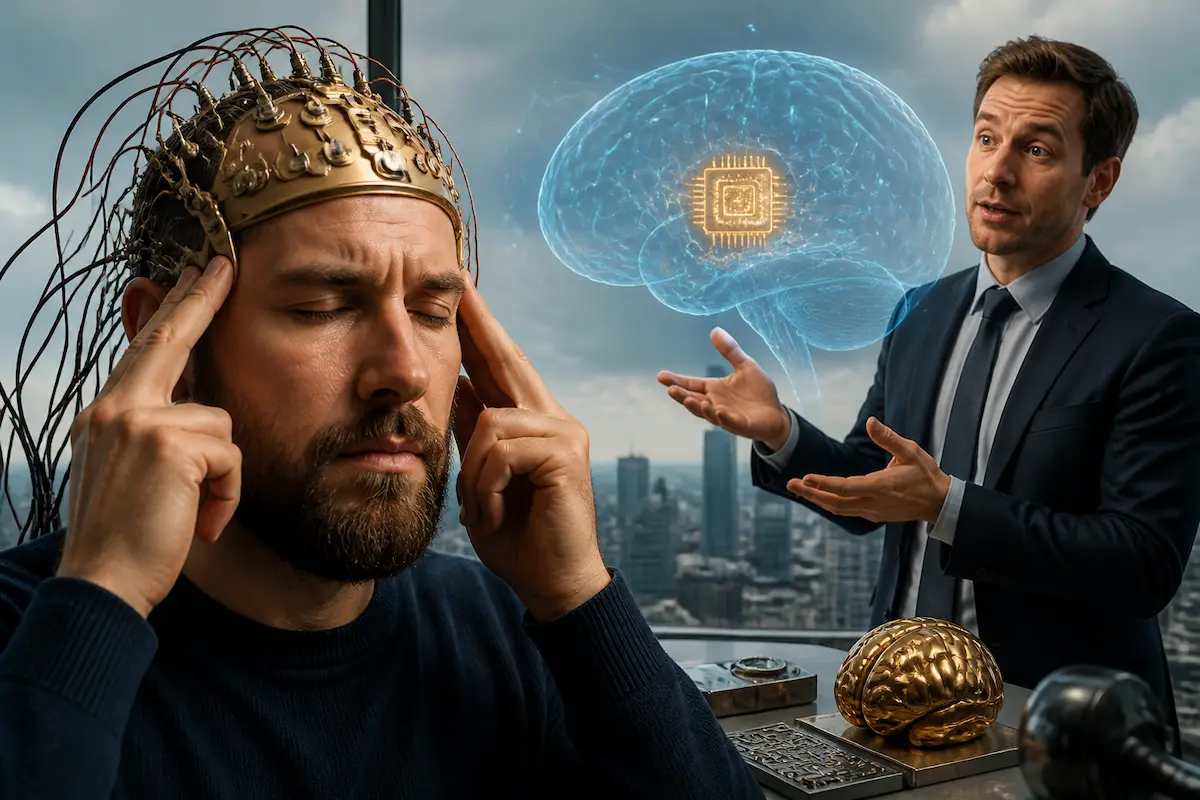
NEW YORK – Following reports of a long-term Bitcoin maximalist irrevocably losing access to a significant cryptocurrency fortune—reportedly worth nine figures—a leading tech futurist has predicted the inevitable rise of "blockchain-enabled memory implants" to safeguard digital assets from human forgetfulness.
Dr. Arlo Pinter, Chief Foresight Strategist at Quantum Leap Analytics, stated that while the incident was "unfortunate" for the individual involved, it served as a stark reminder that even the most cutting-edge financial systems are still vulnerable to what he termed "meat-sack frailties."
"We've spent a decade fortifying digital wallets with impenetrable encryption, multi-factor authentication, and cold storage solutions," Dr. Pinter explained from his minimalist, glass-walled office in Midtown. "And yet, here we are, watching a gentleman who genuinely believes Bitcoin will redefine global finance simply forget the 12-word seed phrase he scribbled on a napkin. It's a glaring design flaw, frankly, of the human condition."
The unnamed investor, identified only as a "lifelong HODLer" from Nebraska, had reportedly been accumulating Bitcoin since its nascent stages, storing his private keys in a digital wallet secured by a password so complex even he couldn't remember it.
Despite the devastating loss, sources close to the investor confirm he remains steadfast in his conviction, frequently seen in his local coffee shop, passionately explaining the merits of decentralization while reportedly still shouting "To the moon!" at anyone within earshot.
Dr. Pinter believes this incident highlights a critical gap in the burgeoning crypto ecosystem.
"The blockchain promises immutability, transparency, and freedom from centralized oversight," he elaborated, gesturing with a sleek, chrome stylus. "But what good is an immutable ledger if the user's access hinges on the notoriously mutable gray matter between their ears? The next logical step is to hardwire that access directly into the brain."
Quantum Leap Analytics' preliminary models suggest that early versions of these implants could function as a secondary, incorruptible mnemonic device, storing wallet keys or even biometric data directly accessible by the individual's neural network. Later iterations, Dr. Pinter mused, might allow direct, thought-activated transactions.
"Imagine never having to write down another seed phrase, never worrying about a phishing scam, because your fortune is literally linked to your consciousness," Dr. Pinter said, a faint smile playing on his lips. "Of course, there will be ethical considerations. Who owns the neural data? What if the implant malfunctions during a market crash? If someone hacks into your brain, and hangs out there for awhile, is it still your property? Who really knows... But frankly, these are minor quibbles compared to the existential threat of a trillion-dollar asset class resting on a Post-it note."
The Bugle's Inspiration
The hint of sweet truth behind the satire →
- 4 Crypto Millionaires Locked Out of >$3 Billioncryptonews.com
More from the Bugle
All Crypto →Crypto
Marathon Fusion Lists $1M $BTC Price As Risk Of Waiting For Their Gold To Be"Touchable"Crypto
New $BEN Franklin Templeton ETF Strips Boring Dependability Out Of Blue-Chip Dividend StocksCrypto
Bankman-Fried Could Have Been Greatest VC If Not For Crime That Supplied All His Investment CapitalCrypto
$JPM Forecasts 10% Annual Returns From $BTC, Assuming Nobody Implements Its CEO’s Policy RecommendationsLatest
Merger Talks Collapse After $TSLA CEO Accuses SpaceX CEO Of Leaking Financial Details On XClimate
California Bullet Train Delayed Again After Bee Counters Restart Because One Was "Kind Of A Wasp"
We use double opt-in because we value our subscribers: one email to confirm, nothing else until you click it. No spam. Unsubscribe whenever the joke stops landing.
The Batshit Bugle is satire. We invent fake news quotes, sources, and story details for comedic effect. References to real public figures are intentional parody of public discourse and should not be mistaken for factual reporting. We occasionally make up names of characters for fake news stories... Any resemblance to actual people, living, dead or undead, is unintentional and coincidental.